Examination of several models for faculty use and success
One interesting consequence of this model is that the number of faculty using technology has a positive feedback effect on the number of new faculty that start to use technology. A dynamic model, written in STELLA, illustrates how the early increase in faculty use will cause an exponential increase in new faculty use, even if the level of faculty development effort is maintained at a constant rate.
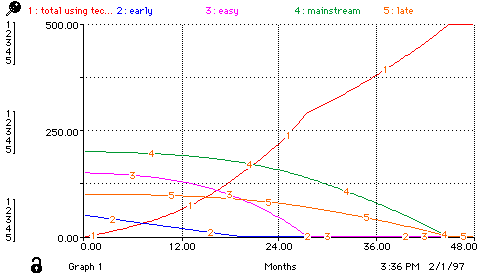 Figure. 1. Diffusion of innovation model. This graph shows that output of a qualitative model programmed in STELLA. There are four categories of faculty from early adopter, early mainstream, mainstream and late. Faculty development effort helps new faculty get started but some faculty get started because of their colleagues. This graph shows the importance of "kick starting" this diffusion of innovation with early help in faculty development.
Importance of Support As we move into the second phase of faculty use of technology, support is a critical issue. It is critical for two reasons. First we have recruited faculty into the ranks of technology users who normally would not be totally comfortable using technology. These faculty need help learning new applications and they need help in fixing technical problems. Second, we have increased the total number of faculty and students using technology. This means that the technology support per capita has probably decreased. Our early recruiting success have exacerbated our current problem.
One crucial aspect of this per capita support issue is that some faculty will drop out from using technology in the class if the level of support drops below some threshhold. I have modelled this drop to be relatively more critical for the mainstream and late adopters of technology. The graph below illustrates how with constant level of faculty development and support we may encourage faculty into the ranks and then loose them. The steady state for faculty use is the balance between new faculty recruited and faculty lost due to lack of suppport.
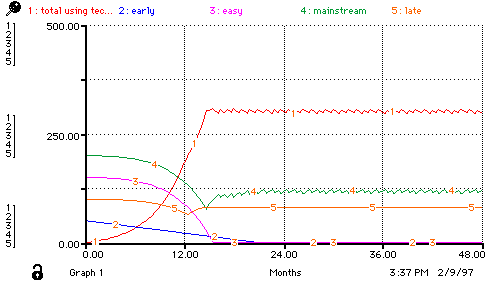
Figure 2. Per Capita Support. This model is based on a constant level of faculty development and a constant level of support. This leads to a decrease in per capita support that may be severe enough (see the line for the late adopters) to actually loose the net number of faculty from that group that are using technology in the classroom. Although seen as only a blip on this graph, it would be very demoralizing to have some faculty just throw in the towell. Also, the faculty development efforts are constantly recruiting new people who are later going to quit.
Targetted faculty development As we move into the "evidence phase" of faculty development, probably the only feasible model for assessing the impact of technology on student learning is to look at the success of a particular program. For example, we could, as a university, choose to recruit faculty from certain disciplines to improve their courses using technology and simultaneously guarantee these faculty some minimum level of support. We could attempt to assess the technology effect on the curriculum goals. This technology effect could feedback to inform our choices for continued investment in either more faculty development (new faculty and new tools) or support (maintaining rooms and student access for example).
A diagram of this model is shown in Figure 3. The key assumption is that the number of faculty using technology in this program needs to be at a certain level to get a maximum technology effect, i.e. too few faculty using technology will not be an optimum experience for the student.
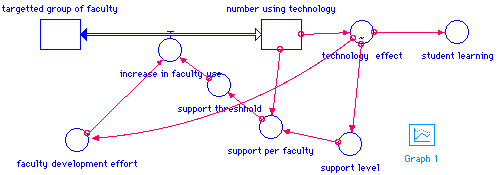 Figure 3. The diagram for the STELLA model for targetted faculty development which includes feedback links from the effect of technology on student learning directly to faculty development and support effort.
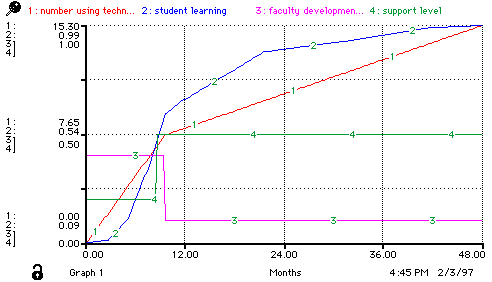 Figure 4: The output of the above model. This shows the increase in student learning follows the increase in faculty. After a number of faculty have been started into the program the level of faculty development decreases and the amount of support jumps.
Go to the next page - Questions
John Rueter 2/9/97