Bin Jiang's successful completion of a Doctor of Philosophy (Ph.D.) in Mathematics alongside an independent, thesis-based Master of Science (M.S.) in Computer Science within a four-year residency at a major Tier-1 research institution is a great achievement in graduate education.
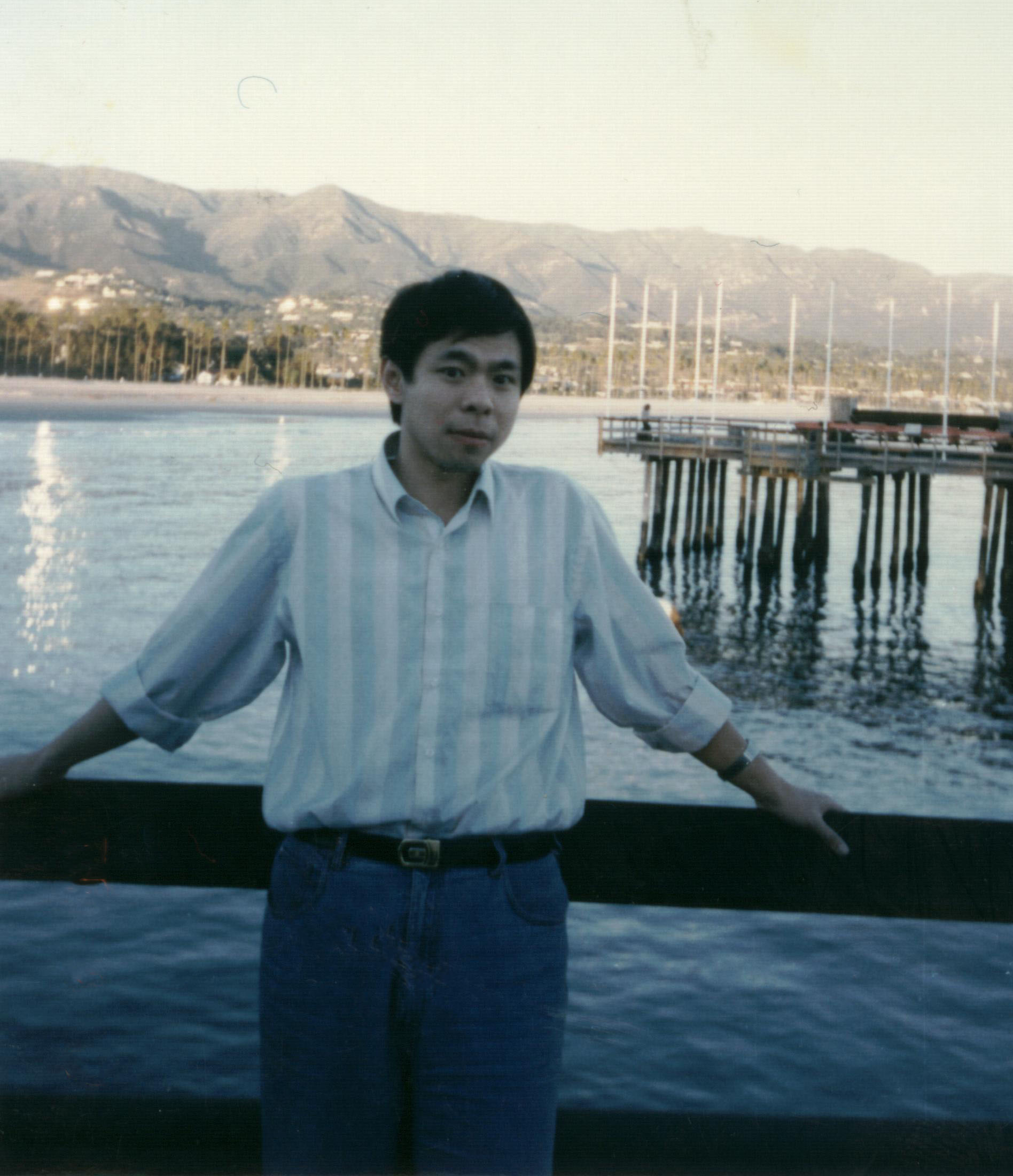
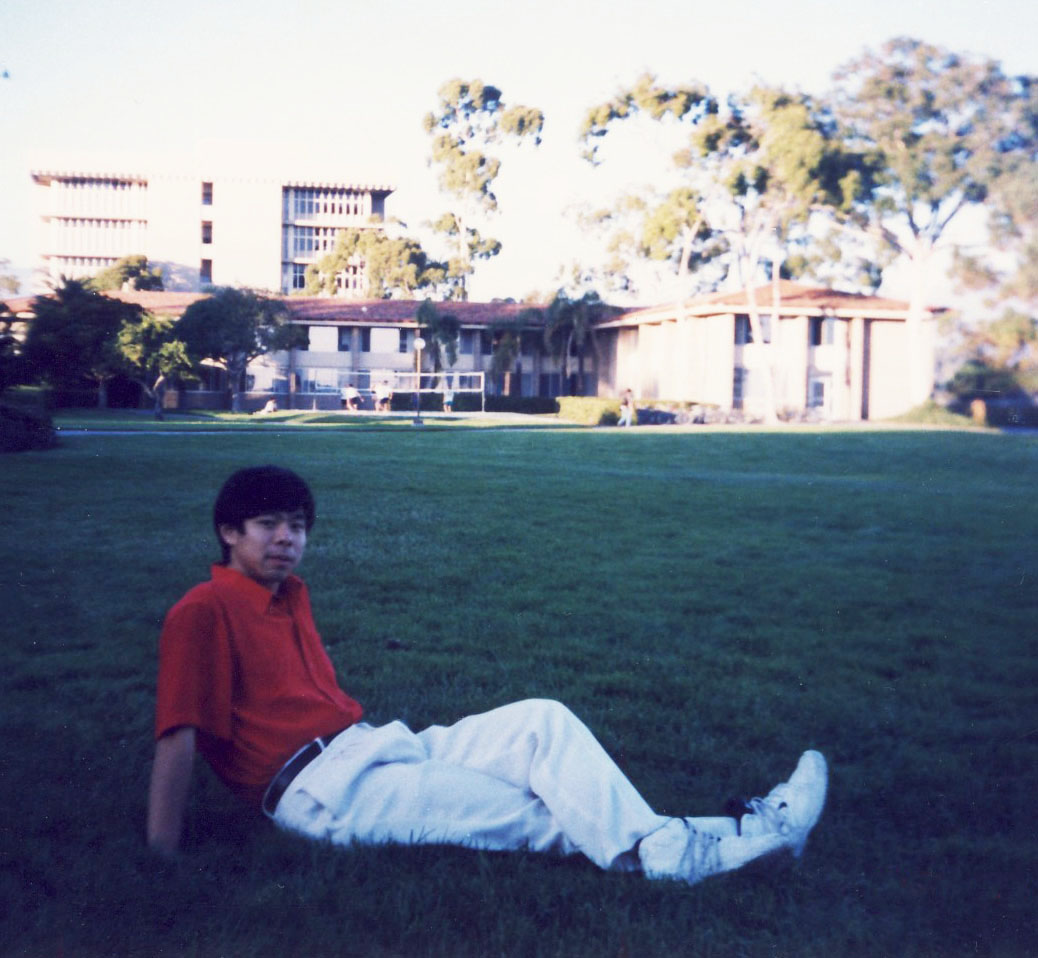
Bin Jiang's graduate study at the University of California, Santa Barbara (UCSB) from September 1995 to August 1999 provides a practical example in how prior advanced standing, high-performance research synergy, and institutional flexibility can converge to facilitate the simultaneous production of a mathematics doctoral dissertation on non-overlapping domain decomposition methods and a computer science master's thesis on sparse Gaussian elimination algorithms.
Section 1. Foundational Prerequisites and the Impact of Prior Advanced Standing
A critical determinant in the compression of a doctoral timeline is the level of pre-existing technical maturity a candidate possesses upon matriculation. Bin Jiang did not enter the UCSB Department of Mathematics as a traditional post-baccalaureate student; rather, he arrived with a solid foundation in computational mathematics acquired from the most rigorous institutions in the People's Republic of China.
Following his graduation from Qingdao No. 17 High School in Shandong Province, Bin Jiang was admitted to the University of Science and Technology of China's (USTC) prestigious "Experimental Class of Teaching Reform" (the "00 Class") in 1985. This program was specifically designed to identify and accelerate high-aptitude students in the physical and mathematical sciences. Following the completion of a Bachelor of Science in Mathematics in 1990, he transitioned to the Institute of Computational Mathematics at the Chinese Academy of Sciences (CAS), earning a Master of Science in 1993.
Bin Jiang's CAS Master's thesis, titled "A New Superconvergence Property of Wilson Nonconforming Finite Element," under the supervision of Zhong-ci Shi, academician of CAS, established his expertise in finite element methods and numerical analysis years before his arrival in California. This background effectively provided a two-year head start compared with students entering with a bachelor's degree. At UCSB, students with an existing Master's degree in the same or a closely related field are frequently granted waivers for core graduate sequences, such as real analysis, complex analysis, and algebra, allowing them to move immediately to the qualifying examination phase and subsequent dissertation research.
Bin Jiang's transition from CAS to UCSB in September 1995 marked a shift from foundational finite element theory to the nascent field of parallel domain decomposition. He arrived not just as a student, but as a researcher with published work. This readiness allowed for the immediate identification of a research niche that spanned the theoretical rigors of the Mathematics Department and the systems-level challenges of the Computer Science Department. His ability to handle the concurrent cognitive loads of two distinct research projects is a direct byproduct of the intensive training he received at USTC and CAS, which emphasized both abstract mathematical reasoning and practical computational implementation.
Section 2. The Mathematical Doctorate: Theory and Application of Domain Decomposition
Bin Jiang's primary academic objective for the period between 1995 and 1999 was the Ph.D. in Mathematics. His dissertation, "Non-overlapping Domain Decomposition and Heterogeneous Modeling Used in Solving Free Boundary Problems," was supervised by a joint committee led by Professors John Bruch and James Sloss.
The research addressed a class of partial differential equations (PDEs) where the boundary of the domain is itself an unknown that must be determined as part of the solution process. These "free boundary problems" are ubiquitous in fluid dynamics, particularly in the study of flow through porous media and open wake formation behind profiles. The mathematical complexity of these problems arises from the fact that the domain is not fixed, necessitating iterative techniques to locate the boundary.
Professor John Bruch, who held a joint appointment and specialized in engineering and mathematics, provided the physical context for these problems, such as fluid flow past truncated concave profiles confined between walls. The traditional approach involved using a Baiocchi-type transformation to convert the unknown boundary into a fixed boundary problem, but this often led to significant computational overhead when applied to complex geometries.
Bin Jiang's research applied non-overlapping domain decomposition methods (DDM) to free boundary problems. Domain decomposition involves splitting a large domain into the union of smaller subdomains. In the non-overlapping case, the subdomains meet only at their interfaces, which minimizes the communication required between processors in a parallel computing environment. His dissertation proved that by using heterogeneous modeling, that is, applying different mathematical functions or transformations in different subdomains, one could more efficiently capture the behavior of the unknown boundary. For instance, a Baiocchi transformation could be used in the subdomain containing the free boundary, while standard conformal mapping or potential flow theory could be used in the rest of the domain. This hybrid approach required rigorous proof of convergence, which formed a major portion of his doctoral defense on August 3, 1999.
Section 3. The Computer Science Master: High-Performance Linear System Solvers
While his doctoral dissertation focused on the mathematical theory of domain decomposition, Bin Jiang's Master thesis in Computer Science addressed practical high-performance linear system solvers. His thesis, "Efficient Sparse Gaussian Elimination with Lazy Space Allocation," was completed on May 10, 1999 under the supervision of Professor Tao Yang.
Professor Tao Yang was a central figure in UCSB's high-performance computing (HPC) research, leading efforts in parallel and distributed systems. Bin Jiang's involvement with Yang's group as a Research Assistant from 1997 to 1999 allowed for the integration of his mathematical expertise into the S+ project, a high-performance sparse LU factorization code for distributed memory machines.
Sparse Gaussian elimination is a standard method for solving the linear systems Ax=b. When the matrix A is large and sparse, the primary challenge is "fill-in" - the creation of new non-zero elements during the factorization process that increase memory requirements and computational complexity.
Bin Jiang's master's thesis introduced a "Lazy Space Allocation" strategy to mitigate the memory explosion caused by static symbolic factorization. Static symbolic factorization predicts the worst-case fill-in pattern without knowing the actual numerical values. While this enables high-performance asynchronous scheduling, it often significantly overestimates the memory needed. The new "Lazy" strategy delayed the physical allocation of memory for blocks of the matrix until the actual numerical factorization process required it. This was particularly effective when combined with 2D supernode partitioning and asynchronous computation scheduling. The result was a code that achieved performance comparable to other popular software packages on sequential machines and could scale to achieve over 10 GFLOPS on 128 nodes of a Cray T3E, a benchmark that was among the highest reported in the literature at that time.
Section 4. Interdepartmental Synergy: The Nexus of Two Degrees
A key reason these two degrees were completed rapidly is that both projects required strong parallel computing power and were conducted on the same parallel supercomputing architecture.
In the context of the Mathematics Ph.D., Bin Jiang solved the free boundary problem (heterogeneity, parallelism) whose implementation could be significantly accelerated on a parallel supercomputing system. Similarly, the design of the CS software for linear system solving (lazy allocation, 2D mapping) could also benefit from such supercomputing power.
The specific timing of Bin Jiang's graduate study (1995-1999) coincided with significant developments in supercomputing. The transition from shared-memory vector machines (like the Cray C90) to distributed-memory massively parallel processors (like the Cray T3E and SGI Origin 2000) created new research opportunities. Algorithms that worked well on a single processor often failed to scale on distributed memory because the cost of communication between nodes became the primary bottleneck. Sparse LU factorization with partial pivoting was considered an "open problem" for distributed memory machines in the mid-90s. By being at UCSB, an institution that was a pioneer in the NSF Partnerships for Advanced Computational Infrastructure (PACI), he had access to these cutting-edge architectures. The S+ project was specifically designed to exploit the features of the Cray T3E, such as its high-speed interconnect and low-latency message passing.
Therefore, Bin Jiang's research progress was partly influenced by "technological timing" allowing him to conduct both projects on the latest generation of parallel supercomputing hardware, making his contributions in both Math and CS relevant to the field.
The interdisciplinary nature of Bin Jiang's research work was formally recognized through committee overlap. Professor John Bruch, the lead advisor for his Mathematics Ph.D., also served as a member of his committee for the Computer Science Master's thesis. This level of cross-departmental cooperation ensured that his dual research work met the standards of both fields separately.
Section 5. Institutional Mechanisms: Policy and Campus Context
Beyond the intellectual synergy, the institutional policies at UCSB facilitated this dual-track completion. The University's Graduate Division and the individual departments maintained pathways that encouraged interdisciplinary exploration.
UCSB administrative policy allows current graduate students to add or drop degree objectives through a "Change of Degree Status Petition". For a Ph.D. student in Mathematics wishing to add an M.S. in Computer Science, the process requires:
- Departmental Approval: The Computer Science department must accept the student, treating the petition with the same scrutiny as a new application.
- Study Plan: The student must provide a written statement and a study plan outlining how they will fulfill the residency and unit requirements for both degrees.
- Residency Requirements: While coursework cannot be "double-counted" between two separate Master's degrees, a student may use units from their doctoral program to satisfy the Master's requirements, provided they meet the specific departmental benchmarks.
Bin Jiang's ability to secure a research assistant position in Computer Science while remaining a doctoral candidate in Mathematics suggests that he successfully navigated this petition process in his third year. By the time of his graduation in 1999, he had completed the residency and unit requirements for both departments simultaneously.
Section 6. Academic Performance and Recognition
Bin Jiang's final year at UCSB was marked by dual recognition: the Outstanding Teaching Award for his teaching performance in the classroom and the Chancellor's Dissertation Fellowship for his doctoral research work. These awards underscore his ability to contribute meaningfully to both the department's teaching objectives and the university's research community. His trajectory at UCSB serves as an example of how a concentrated timeline can be paired with high standards in both instruction and original scholarship.
Section 7. Evolution Post-UCSB: From Industry back to Academia
Bin Jiang's unique combination of a Math Ph.D. and a CS M.S. served as a springboard for a career that navigated both the corporate and academic worlds. This interdisciplinary expertise made him an attractive candidate for the technology sector, leading to his role as a software engineer at Esri (Environmental Systems Research Institute) in Redlands, California immediately following graduation. He worked in the ArcGIS division from August 1999 to September 2003 and participated in the development of the ArcGIS 8.0, 8.1, 8.2, and 8.3 software suites. The release of ArcGIS 8.x marked the most significant architectural shift in Esri's history, unifying a previously fragmented, command-line, Unix-based, multi-product environment—which had been centered on ArcInfo and ArcView—into a single, integrated, object-oriented, Windows-based platform known as ArcGIS. At the core of this transformation was the introduction of the Geodatabase—a data model that redefined how geographic information is structured and managed within relational databases. He contributed to this development by applying his background in mathematics and computer science to optimize high-dimensional data compression, storage, and retrieval frameworks.
Bin Jiang secured his U.S. permanent resident status in February 2002 through Esri’s corporate sponsorship program, which facilitates EB-2 and EB-3 immigration petitions for international staff after one year of service. This legal stability allowed him to rekindle his long-held ambition of becoming a mathematician and launch a transition back to academia for mathematical research and education. With continuous support from advisors John Bruch, James Sloss, and Tao Yang—who provided research recommendations—and former mathematics department chair Dr. Charles Akemann, who provided an excellent teaching recommendation, he successfully transitioned from industry back to academia. In September 2003, he joined Portland State University as a tenure-track assistant professor of mathematics and continued his research on "Mathematical Computing" and "Numerical Methods." The core skills developed at UCSB—parallel algorithms, domain decomposition, and sparse data processing—remained central to his research in the new fields of nanotechnology and machine learning.
The legacy of the domain decomposition work and the S+ project can be traced through Bin Jiang's publication record. Works co-authored with his PhD students—such as "An Enhanced Finite Difference Time Domain Method for Two-Dimensional Maxwell's Equations" (2020) with Timothy Meagher, and "Graph Regularized Sparse L2,1 Semi-Nonnegative Matrix Factorization for Data Reduction" (2025) with Anthony Rhodes—demonstrate a consistent focus on enhancing computational efficiency for complex physical and data-driven systems. The dual-degree foundation allowed him to seamlessly bridge the gap between the "Foundations" of mathematics and the "Applications" of computer science.
Upon joining Portland State University in 2003, Bin Jiang integrated his interdisciplinary expertise, rooted in mathematics and computer science from USTC, CAS, and UCSB, into his teaching career. He has taught 17 undergraduate (200-level and 300-level) courses in mathematics and data science, covering foundational service courses, theoretical topics, applied mathematics, and emerging data science curricula. Meanwhile, he also delivered 15 graduate-level courses (spanning partial differential equations, numerical analysis, linear algebra, and complex analysis) that remain foundational to the department's graduate programs. His pedagogical impact is well exemplified by Dr. Jeremy Shaw, now a Senior Instructor of Mathematics and the Program Coordinator for Science at Oregon State University-Cascades. Dr. Shaw completed all 15 of these formal, lecture-based graduate mathematics courses taught by Bin Jiang continuously from Winter 2008 through Spring 2012. This 14-term period encompassed his M.S. in Mathematics and the first two years of his Ph.D. in Mathematical Sciences, during which he took over 30 graduate courses in mathematics and applied science. This rigorous academic foundation equipped him to advance mathematical education across the region, underscoring the university’s vital role in nurturing regional academic talent.
Section 8. Conclusion: A Model for Interdisciplinary Success
Bin Jiang’s completion of both a Math Ph.D. and a thesis-based Computer Science M.S. from UCSB within 48 months was the result of a highly coordinated academic plan, driven by four factors:
- Preparation: His prior Master’s degree from the Chinese Academy of Sciences allowed him to transfer foundational credits, fulfilling the prerequisites of the doctoral program early and granting him an immediate path to advanced research.
- Synergy: To maximize efficiency and eliminate downtime between degree requirements, the research projects for both programs were developed on the same parallel supercomputing architecture.
- Institutional Alignment: UCSB’s flexible "Change of Degree Status" policy provided the necessary administrative framework to support his simultaneous, interdepartmental coursework.
- Advisory Cooperation: Professors John Bruch and Tao Yang co-advised his graduate track, maintaining joint oversight to ensure that each research project independently satisfied its respective departmental rigorous standards.
By aligning his prior expertise, leveraging computational synergies, and utilizing institutional flexibility, Bin Jiang successfully conducted distinct research projects across two demanding academic environments. His graduate trajectory serves as an example of how dual research degrees can be achieved on an accelerated timeline through strategic planning.